The olive tree is one of the oldest living witnesses to human civilisation in the Mediterranean and the Levant—a tree that outlives empires, marks the boundaries of villages, and holds the memory of families in its trunk. In Palestine, the uprooting of olive trees has been one of the most systematic acts of an ongoing erasure: not only an agricultural crime, but an assault on genealogy, belonging, and time itself. More than a million trees have been uprooted since 1967, many of them centuries old and all of them irreplaceable.
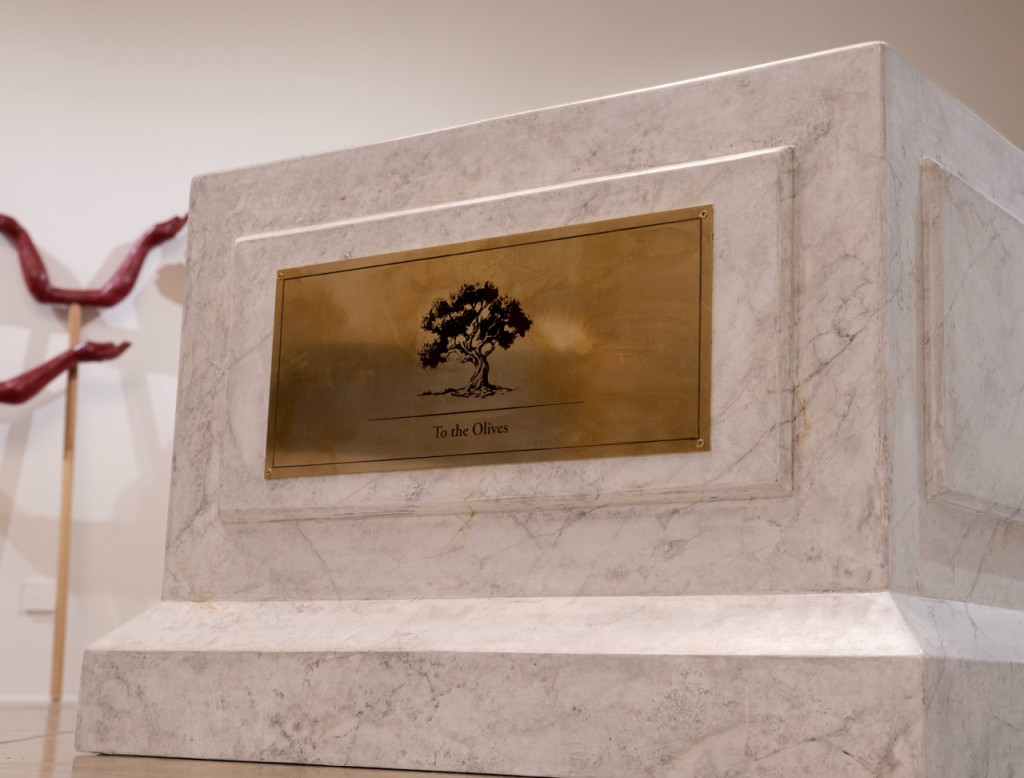
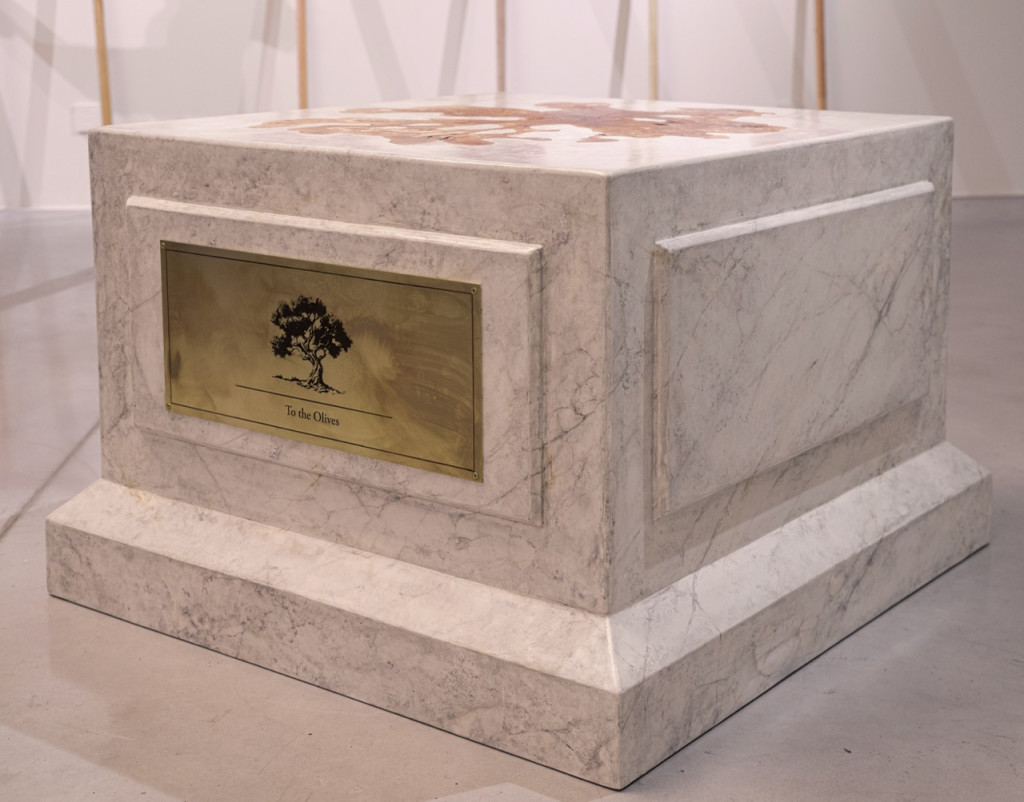
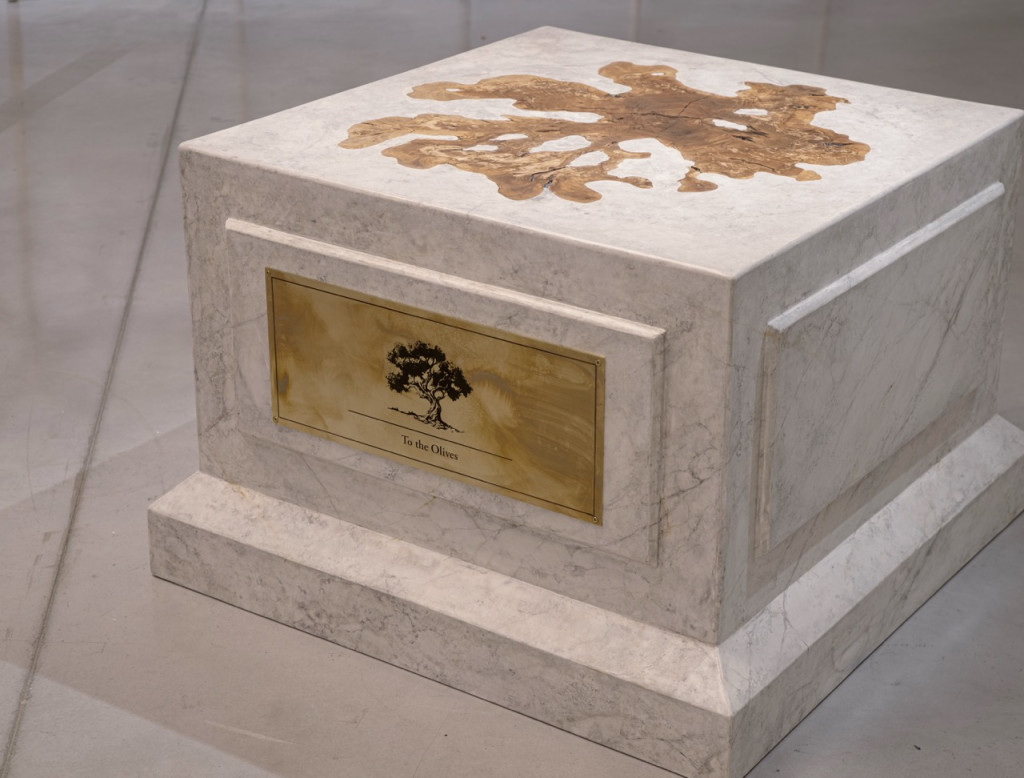
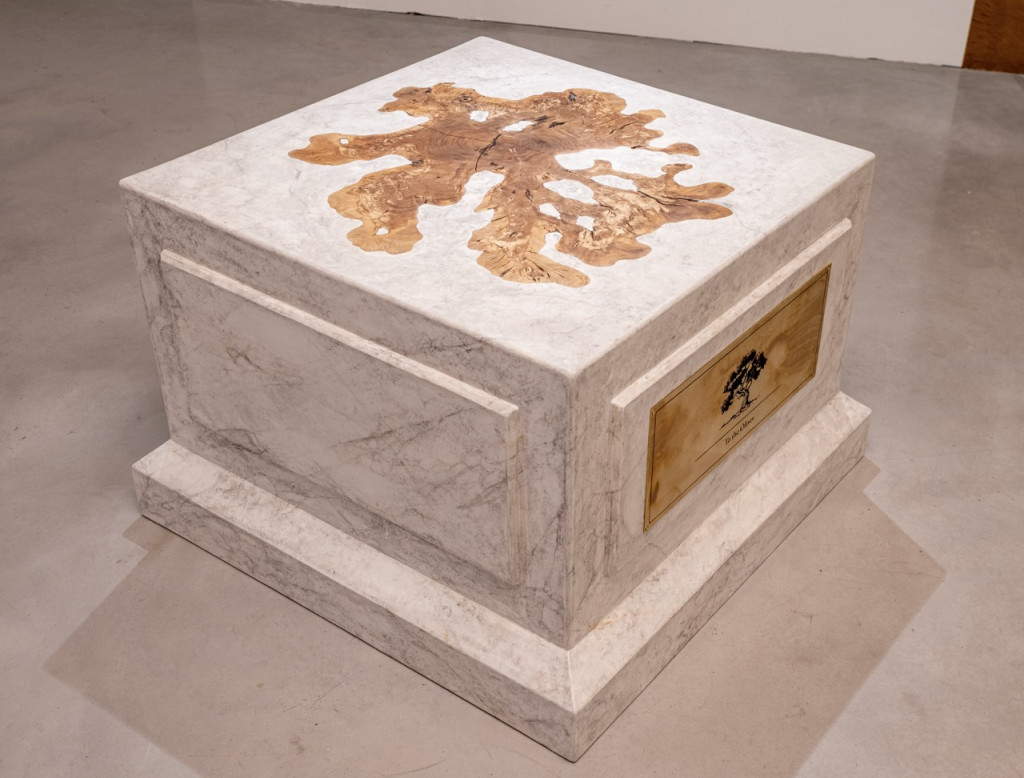
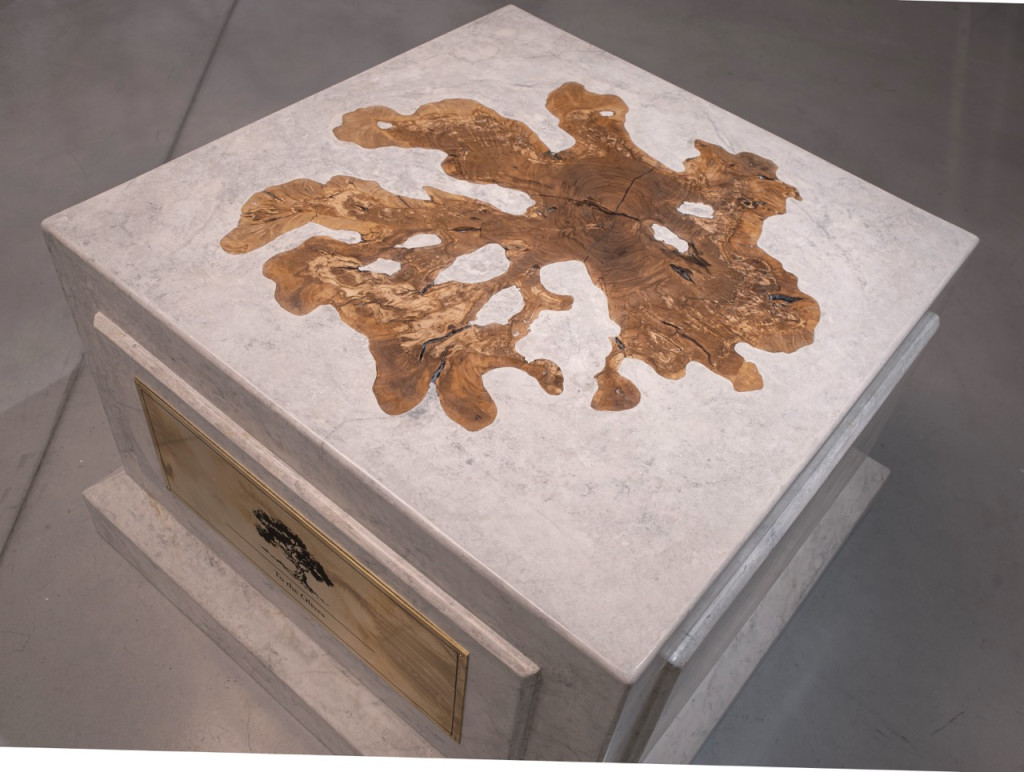
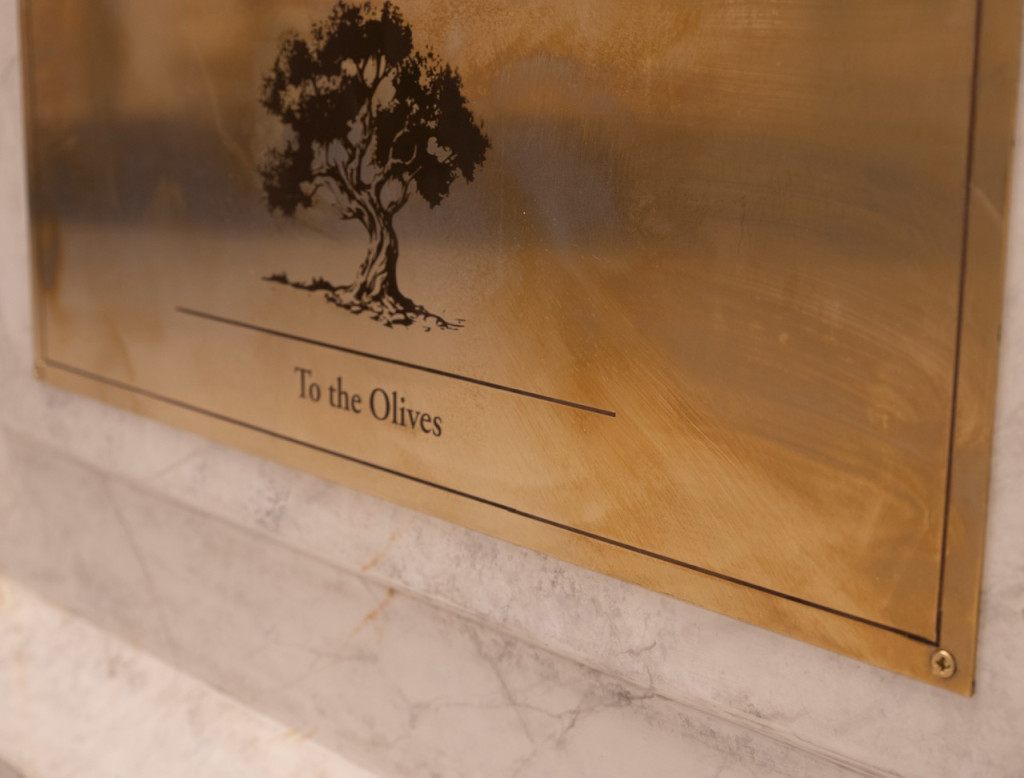
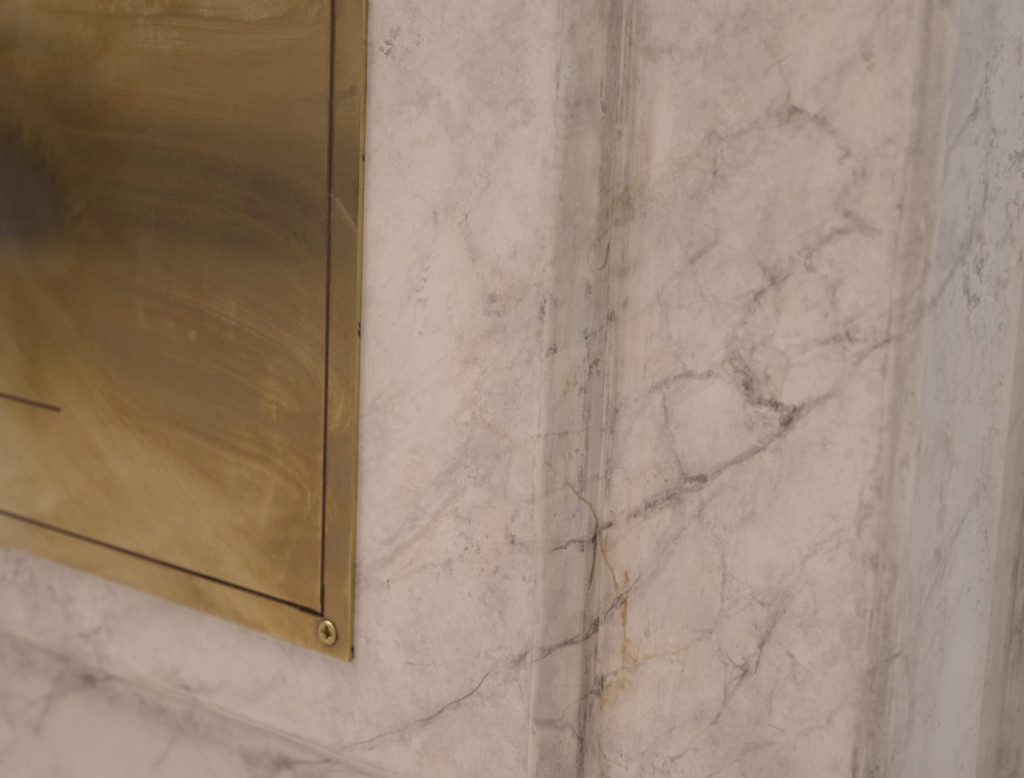
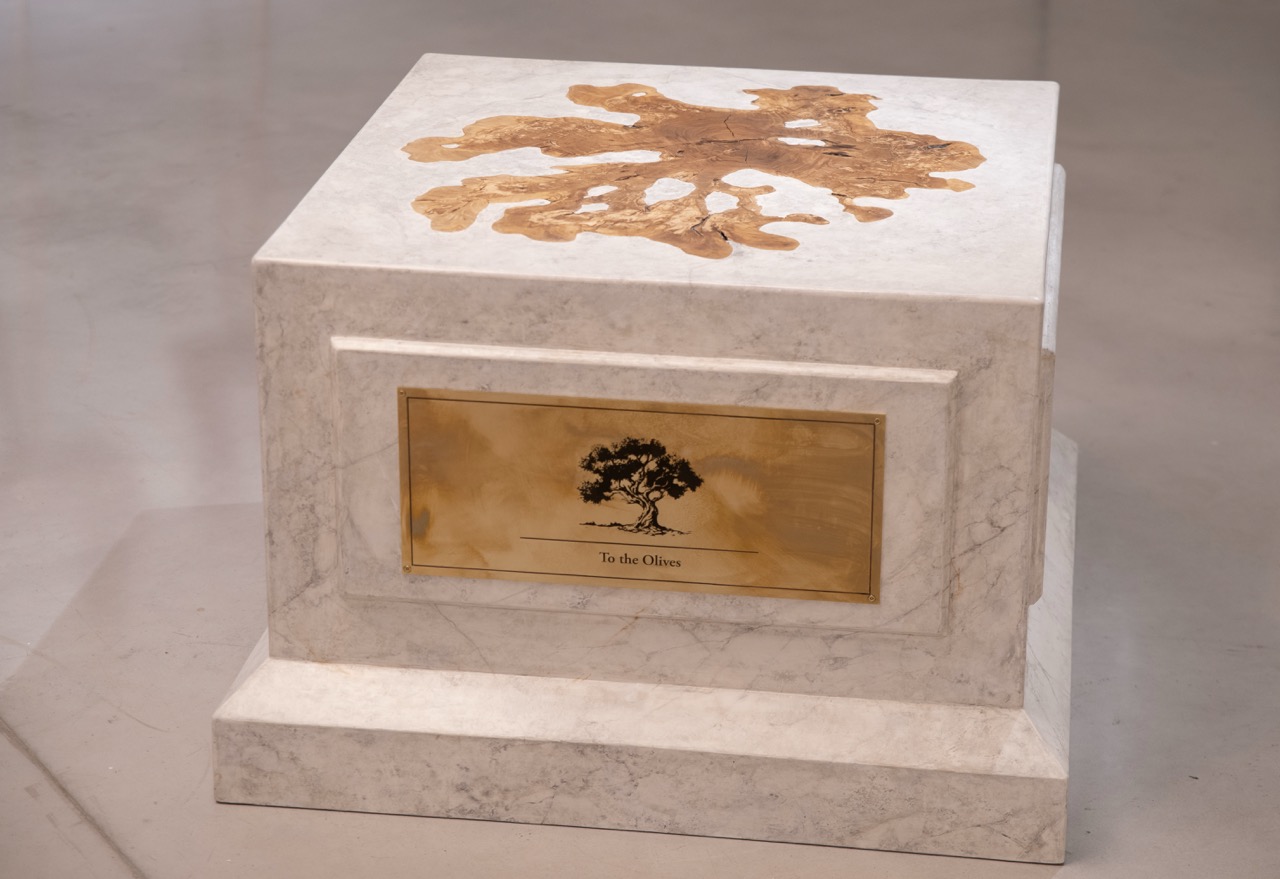
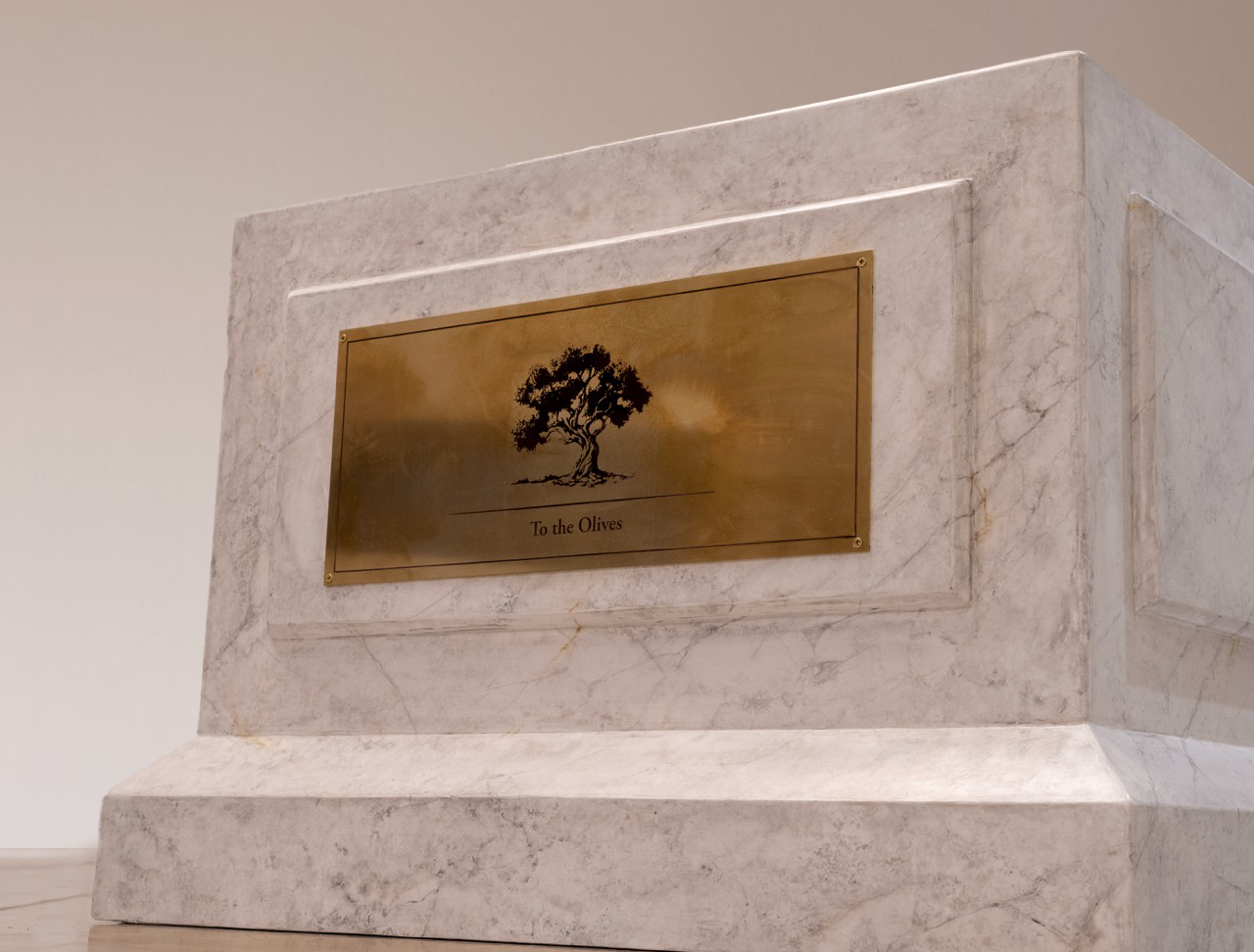
To the Olives takes the form of a classical commemorative plinth—the civic object through which societies choose to remember and honour. Its stepped base, moulded body, and dedicatory brass plaque, engraved with an olive tree, speak the language of public memorial. This is the form cities erect for generals, founders, and the celebrated dead. Here, it is built for trees.
The plinth is made of faux marble—a material with its own history. In Baroque churches, faux marbre democratised the appearance of permanence: the devotion was real; the stone was not. In To the Olives, this logic is both honoured and inverted. The monument performs institutional authority while quietly acknowledging that no institution has built it. The authorities that might normally commission such a memorial are implicated in the uprooting it commemorates. The artist builds the monument herself, in false marble—not as an act of diminishment, but as a declaration: the grief is real, the loss is real, and the insistence on remembrance is real, even when the structures that should carry it have failed.
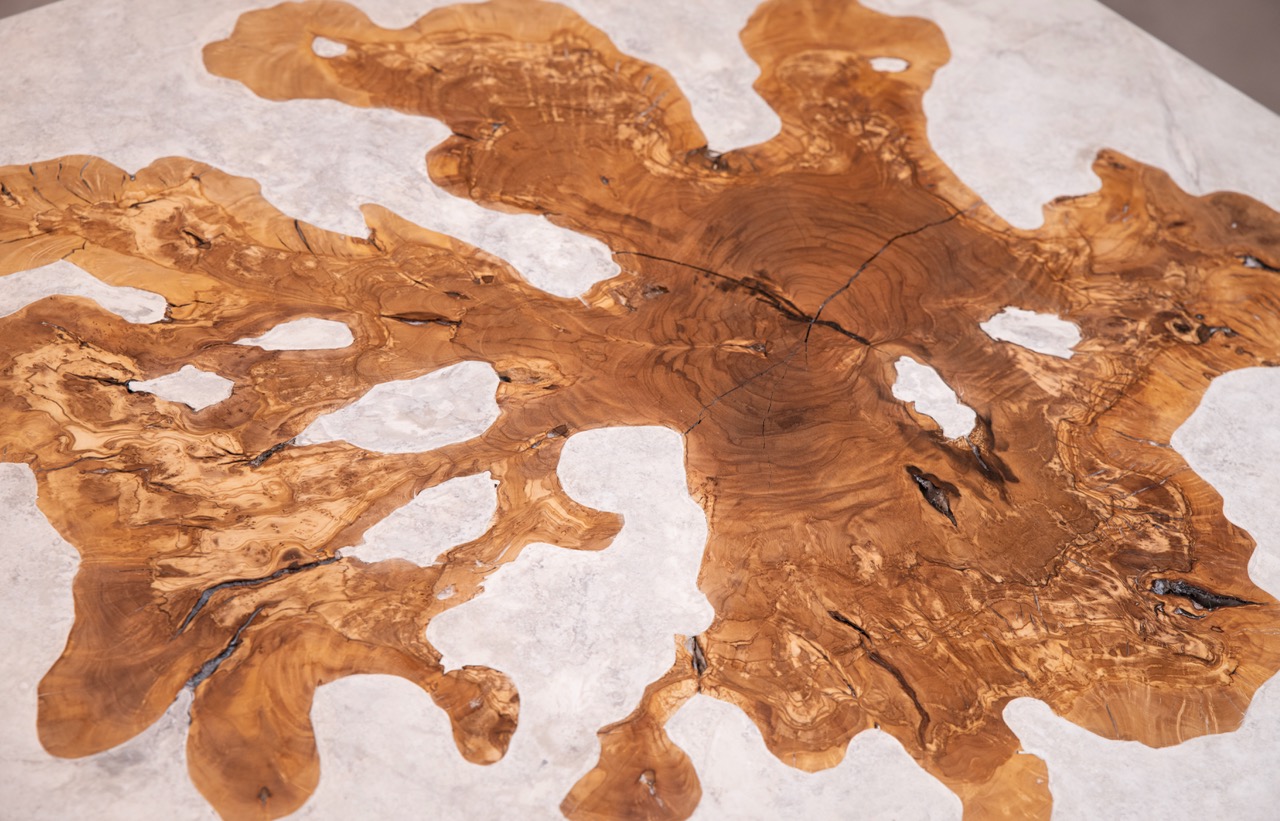
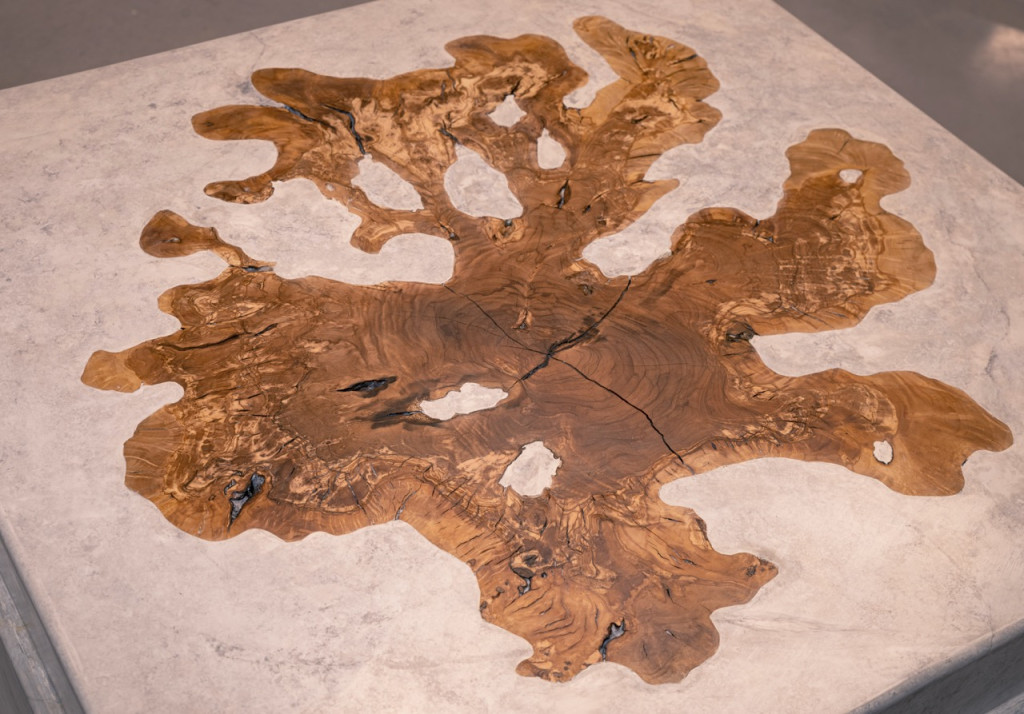
Set into the surface of the plinth is a cross-section of an olive root—not the canopy, the branch, or the fruit, but the root. What was torn from the earth is placed atop the monument, inlaid with the precision of a relic. Seen from above, it reads like a map, a wound, something that once held a world in place. Its organic irregularity, set against the plinth’s geometric formality, embodies the work’s central argument: the tension between what endures and what is made to disappear, between what is officially memorialised and what is deliberately forgotten. To uproot is not only to remove what is visible, but to destroy the capacity for return and regrowth—and the claim that roots make upon the land. To the Olives refuses this severance. It places the root at the centre, in the position of the honoured subject.
This work belongs to a sustained practice in which Nadia Kaabi-Linke engages with Palestine not as a distant subject, but as a territory of personal and ancestral entanglement—from Dammi, the keffiyeh made with her own blood in the aftermath of 7 October 2023, to works addressing the destruction of Jerusalem’s Maghribi Quarter. Her engagement is neither decorative nor rhetorical. It is indexical: body, material, and form always bear a direct relationship to what they mourn or resist.
To the Olives is a memorial to the uprooting of olive trees that should never have occurred—and a monument to the end of that uprooting.