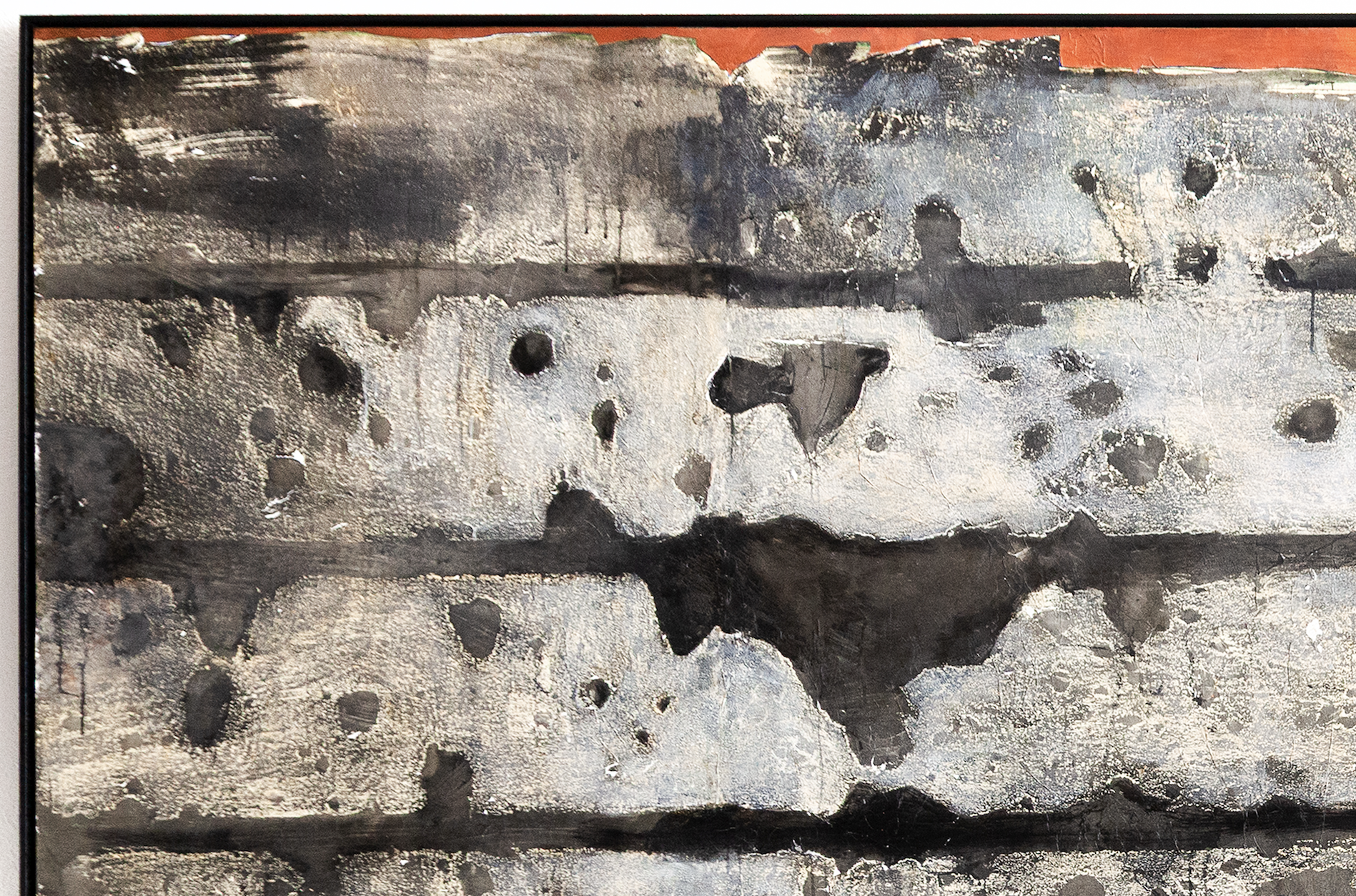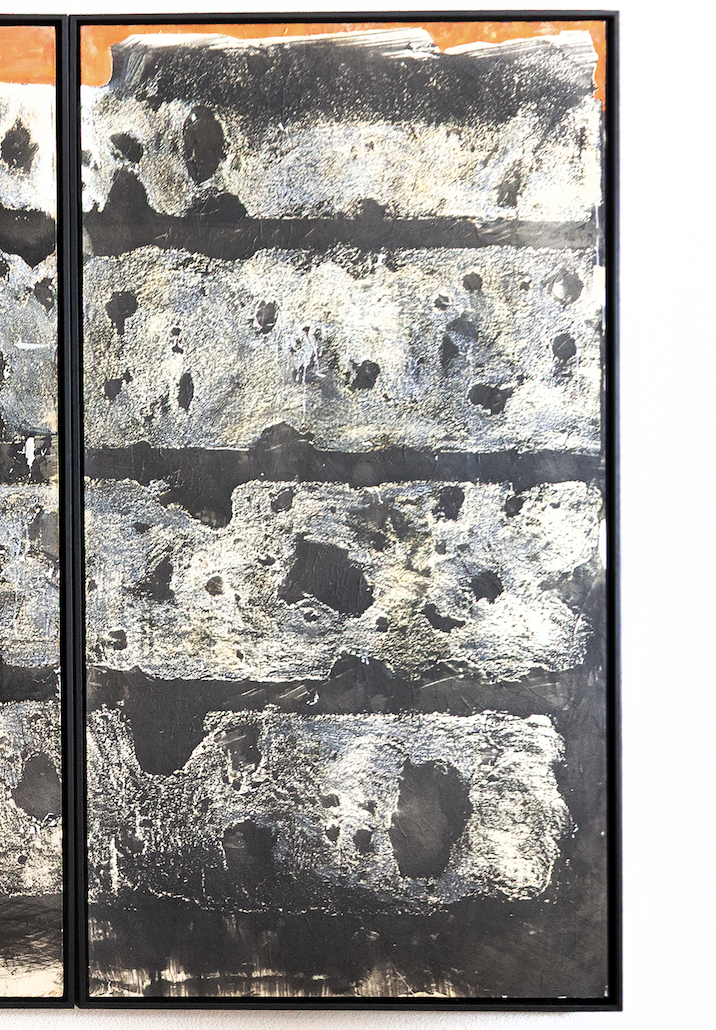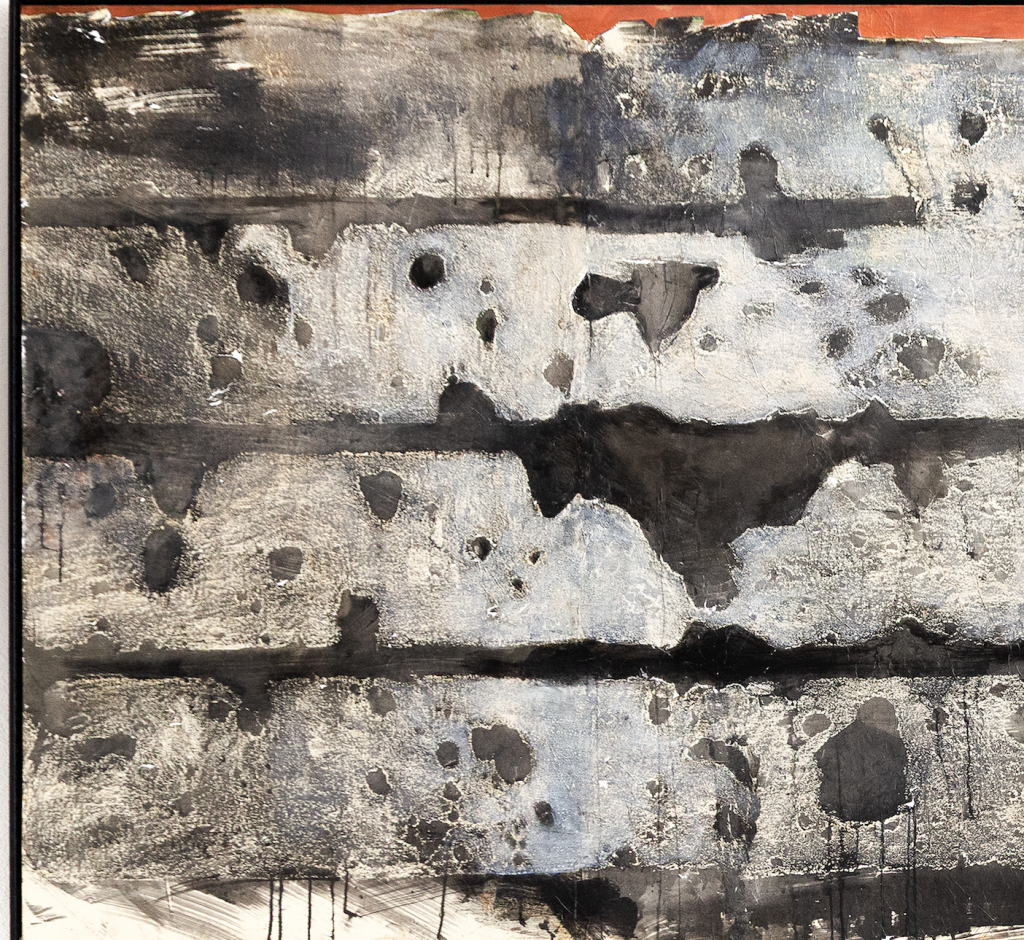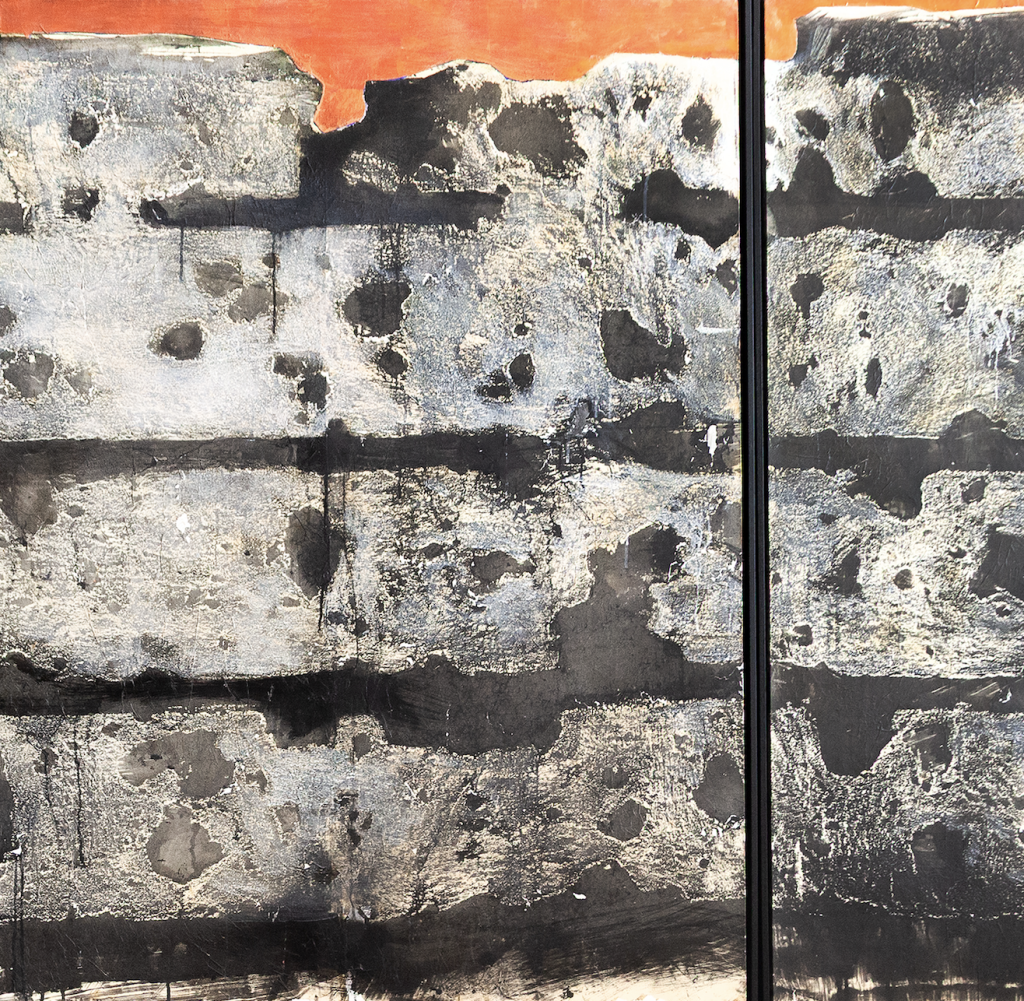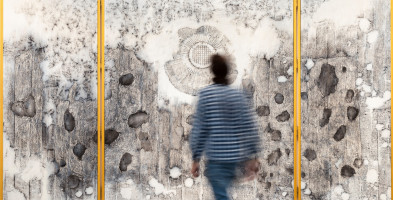
Nadia Kaabi-Linke’s contact prints — or transfer prints — in ink and tissue paper on canvas grow out of the fusion of two dominant currents in German-German everyday life: banality and trauma. Nowhere did postwar pain gnaw longer into the cityscape than in East Berlin, and nowhere were sorrowful memories washed away more thoroughly by the comfort of reunification than here, in Mitte. On ground eaten away by bombs, burnt out, then left parched and barren by the SED leadership’s aversion to anything past, old, or inherited, an unprecedented creative scene sprang up after the Wall fell — one that would completely remake the city’s face within a few short years. Ruins were squatted; the alternative scene, art and music, went looking for new territory; galleries and exhibition spaces sprang up alongside illegal basement bars and underground clubs. A movement that, at that very moment, was in danger of becoming mere history in New York was reborn in the middle of Berlin.
But just fifteen years later, that movement had run out of breath in Mitte too. The pioneers had grown older and settled. In the wake of the euro crisis around 2008, private capital flowed into Berlin’s real estate market, accelerating the gentrification of the inner city. Everyone counted on profitable deals from downtown Berlin’s real-estate ruins. Upgraded infrastructure brought new offerings, new comforts — and gradually pushed the local scene’s bohemian chic into more remote niches. Half-collapsed, roughly improvised prewar buildings were pulled like rotten teeth from the rows of houses and replaced with shiny new implants. Dark mosaic tile and greenish, shimmering picture windows soon came to dominate Mitte’s facades. The townhouse — muted palette, clean geometry — became the visual counterpoint to the pitted, graffiti-sprayed old facades, and with it a symbol of the erasure of memory: memory that had petrified into the bullet-riddled ornamentation of the war’s final days. The once-experimental galleries had long since established themselves on the market; the exhibition spaces and clubs had become institutions. The boiling point had passed; the untamed energy had evaporated, and new structures had formed in its place. The new cityscape now relieved visitors and residents of the imposition of enduring the traces of past violence still present in the walls — and with them, the need to acknowledge the rubble our present moment is built on. Artists, junkies, punks, and poets — the very people who’d been looking for exactly that — had moved on; lawyers, politicians, developers, and lobbyists now populated the streets of Mitte.
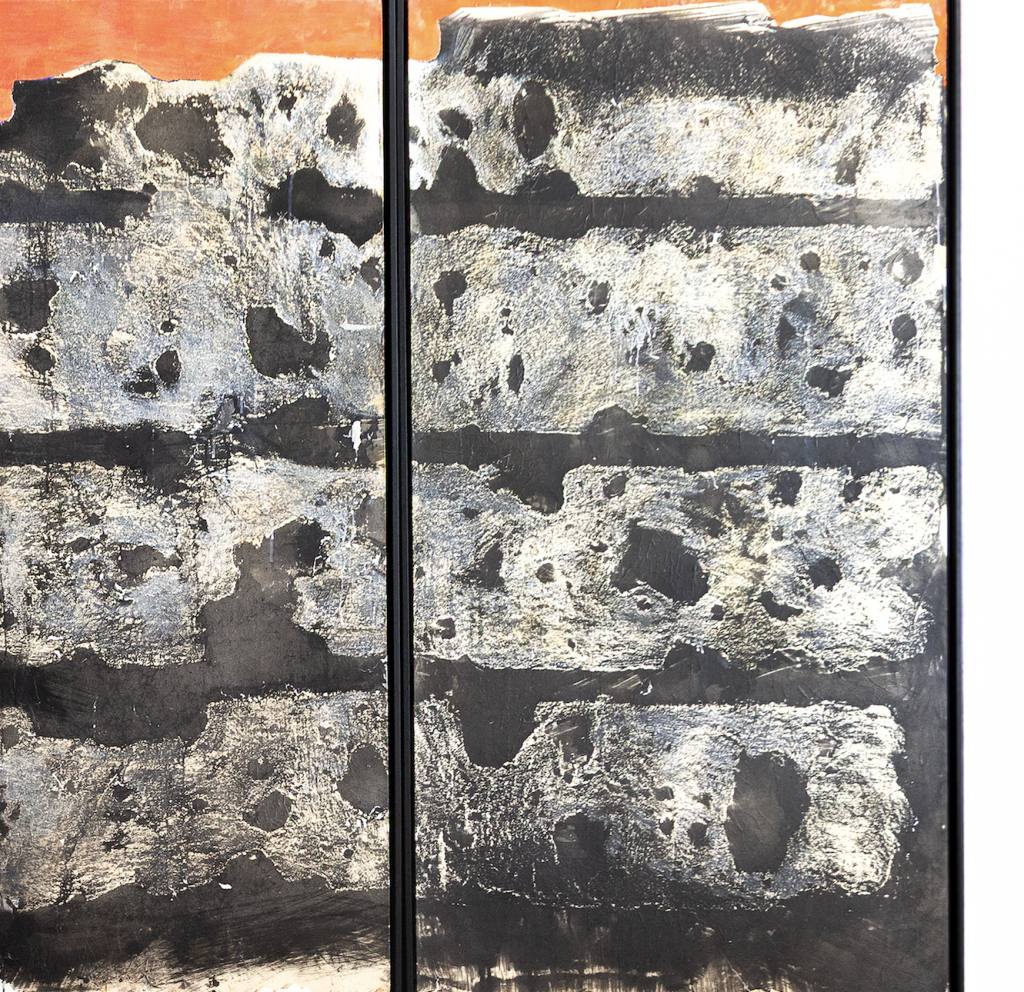
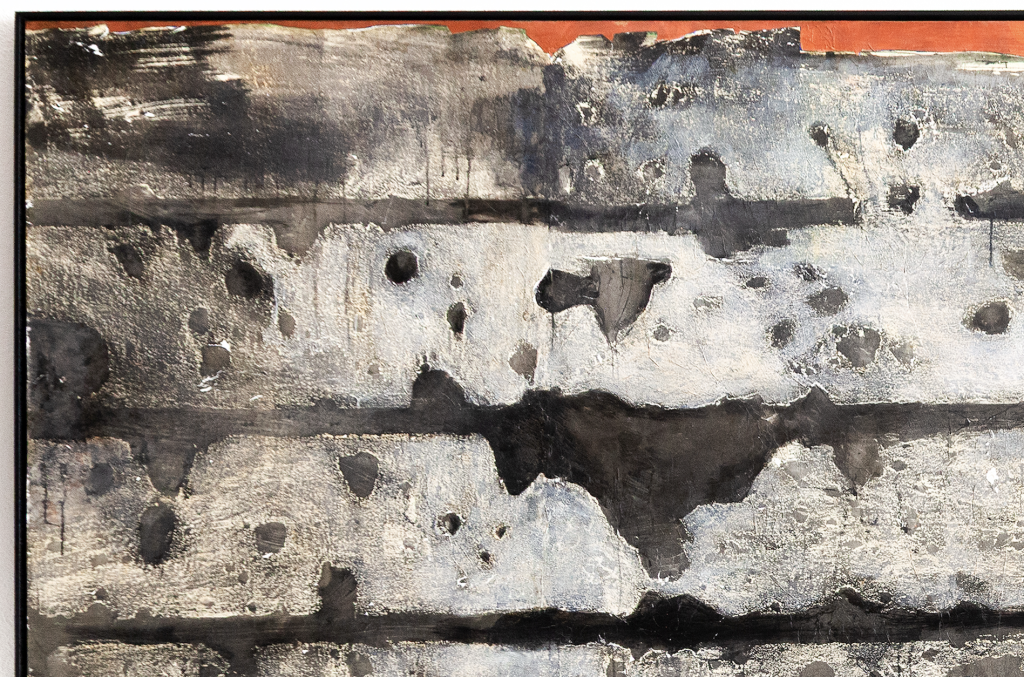
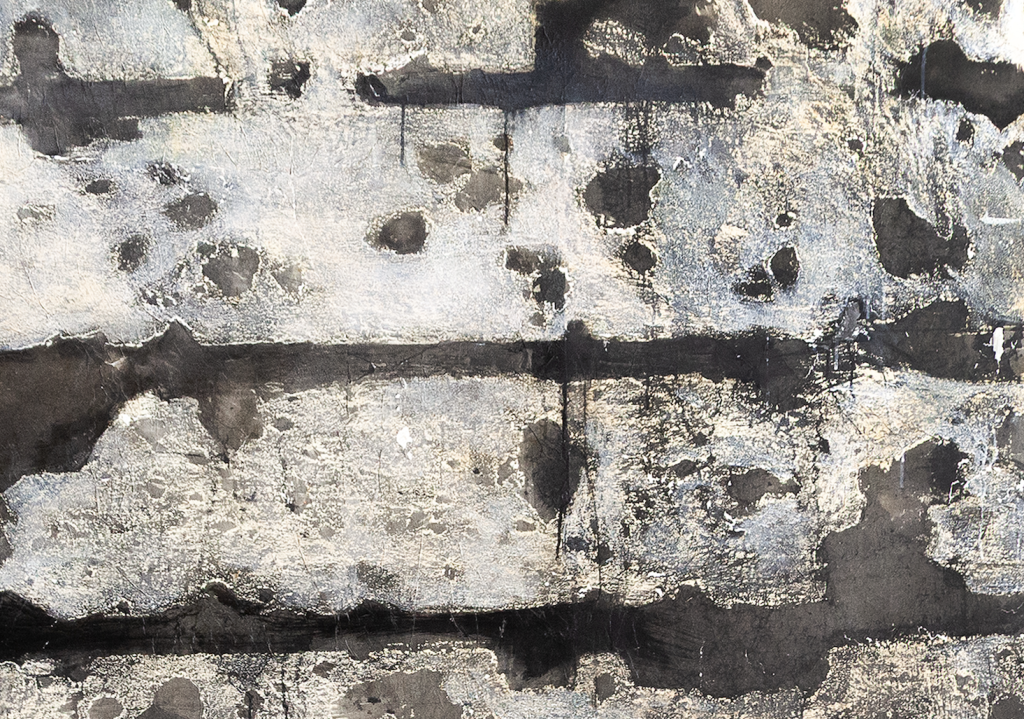
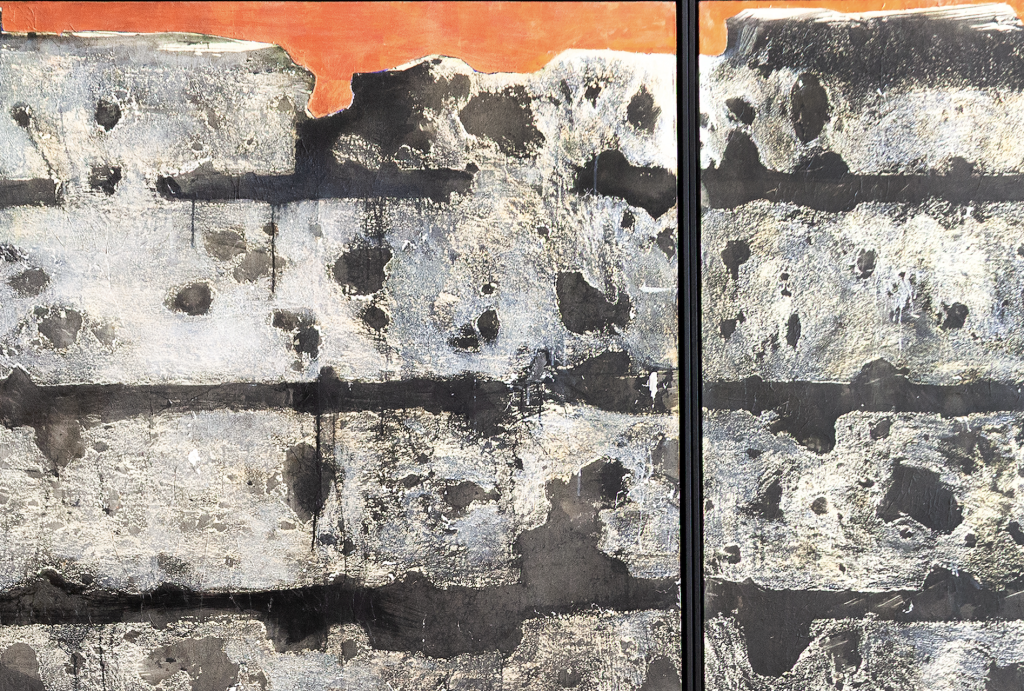
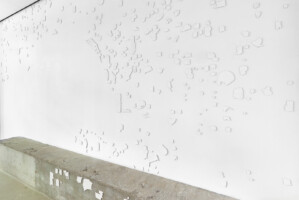
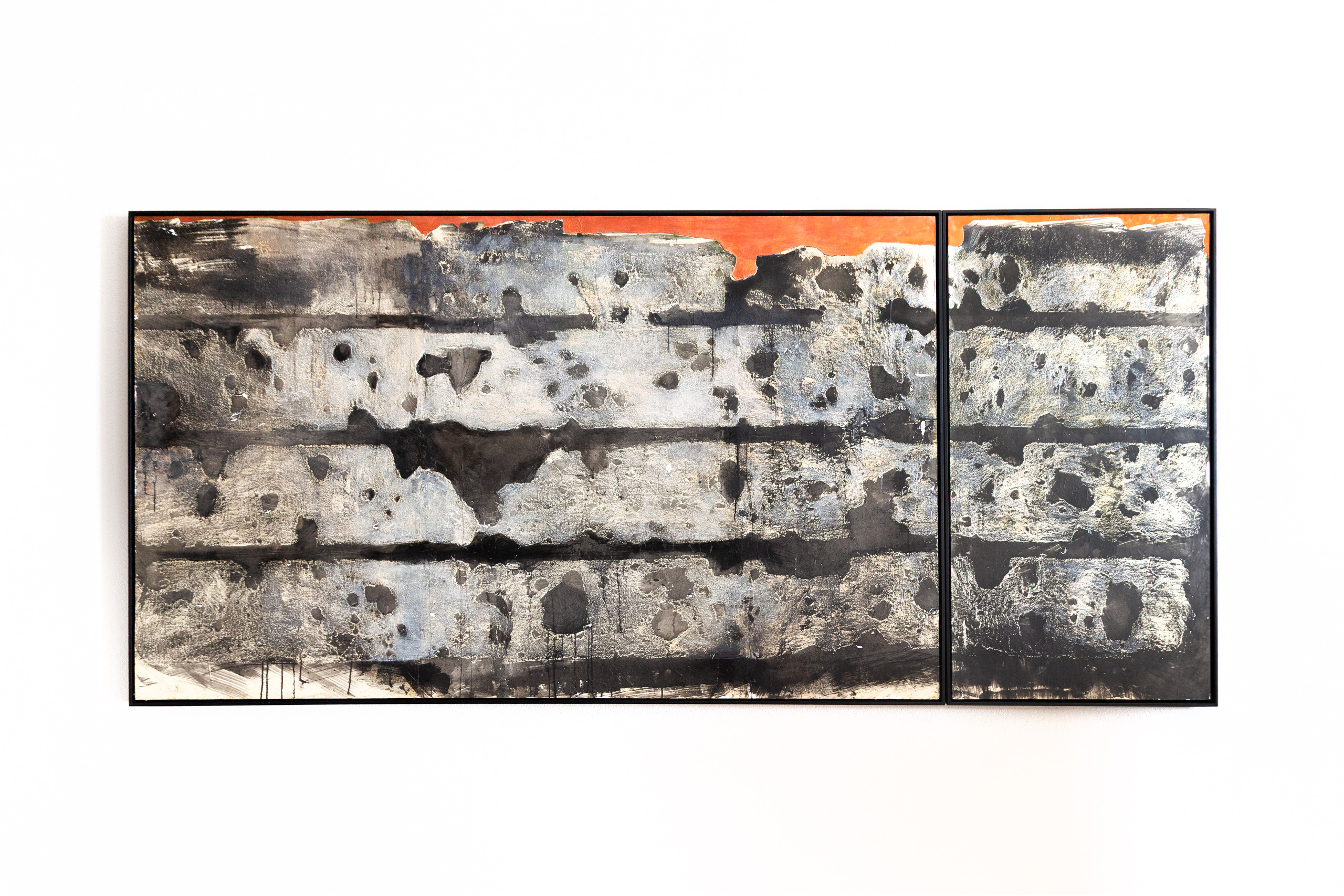
It was in this period — when the traces of what had been were still visible, but the pull toward a more refined future had already become unstoppable — that work began on Große Hamburger Straße. The diptych is the first transfer print in Kaabi-Linke’s body of work to take up the urban ornaments of violence: war damage etched into building facades. The image documents a wall eaten away by shrapnel and rifle fire, standing between the Sophienkirche and the old Jewish cemetery. The masonry is a mute witness to the street fighting that, as late as May 1945, still claimed senseless victims. In stark contrast to the chaos of violence stand the horizontal seams of the massive stone blocks, layered one on top of the other. The catastrophe of total war has passed into the architecture’s stability. The terror of the Allied air war and the Red Army’s mortar fire broke against the banality of solid Prussian masonry, built on nothing sturdier than sand. In this sense, this early work is already in close dialogue with later pieces such as Am Hegelplatz (2009), Sniper (2014), Sepulchre (2014), and The Altarpiece (2015) — all of which likewise take up absurd violence, chaos, stability, and continuity, giving shape to a core motif of German history.
What connects these works — and others by Kaabi-Linke — is not the logic of the damage report. This isn’t about documenting the findings of some pathological case history. Rather, a dialectical motif is at work, owing to the fact that every state of exception is doomed, sooner or later, to be undone by the banality of everyday life. American art historian Jessica Chen points to this dialectic in the images. She describes the transfer prints as flip images that invert the traditional understanding of light and dark: “By excavating the previously neglected trace [Kaabi-Linke; TL], one proposes that one’s blind spot is not the obstruction of light but the failure to detect the darkness.”
In other words, this is about a message of hope, deeply human, implicit in every trace of damage—a message that pierces the traumatic darkness of wartime memory like a glimmer of light. For Nadia Kaabi-Linke, these transfer prints of walls—walls into which acts of violence and corrosion have eaten themselves—are a kind of artistic appropriation of Rumi’s verse that the wound is the place where light enters the body. This hope echoes something the conceptual historian Falko Schmieder has observed: every bullet that left its trace of destruction in the masonry missed its human target. Every wound in the stonework is the record of a life spared, in that instant/2.
1 Jessica Chen, “Every Contact Leaves a Trace” Nadia Kaabi-Linke’s
Transfer Prints, 2008-2016, A Thesis Submitted in Fulfilment of Requirements
for Graduation with Distinction in the Department of Art, Art History & Visual
Studies. Duke University, Trinity College, 2020.
2 “Those wishing to extract reconciliation can view each bullet hole as
the inversion of a gravestone—where one is found, the target cannot have been
hit,” Falko Schmieder, “On the Track of History.“ Zit. nach Wiederabdruck in: Nka
Journal of Contemporary African Art, No. 32, Spring 2013, S.128-137 (hier S. 134).